Biography
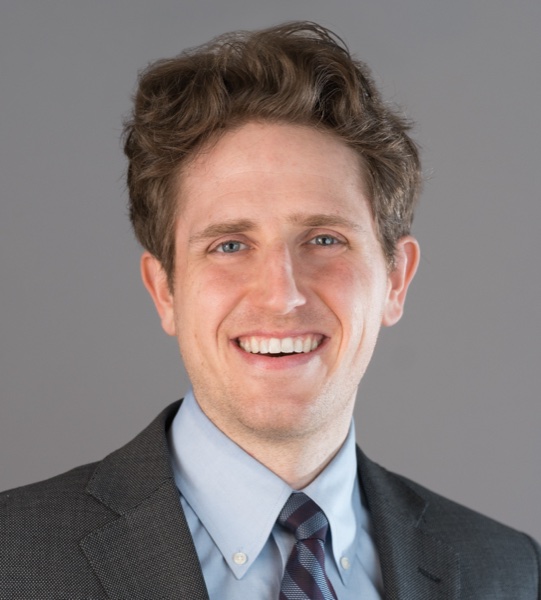
Michael V. Heinz is an Assistant Professor of Psychiatry at the Geisel School of Medicine at Dartmouth and an attending psychiatrist at Dartmouth Health. His work bridges clinical psychiatry and artificial intelligence, focusing on scalable digital technologies for mental health assessment and treatment.
Dr. Heinz is a co-lead of the Therabot research program, whose randomized controlled trial — published in NEJM AI (2025) — was the first of its kind for a fully generative AI therapy chatbot and demonstrated clinically meaningful reductions in depression and anxiety. The work has been covered by more than 200 outlets worldwide, including The New York Times, The Washington Post, and NPR. He co-founded Therabot Labs LLC to translate this work into broader clinical use.
His additional research employs passively collected smartphone and wearable sensor data — movement, heart rate, facial cues — to detect and predict mental health symptoms using deep learning. He serves on the leadership committee for Dartmouth's Evergreen initiative, which aims to promote flourishing among Dartmouth College students by pairing rich passive contextual data with just-in-time adaptive interventions.
He holds the rank of Major in the U.S. Army Reserve Medical Corps.
Randomized Trial of a Generative AI Chatbot for Mental Health Treatment
The first randomized controlled trial of a fully generative AI therapy chatbot. Participants with major depressive disorder saw an average 51% reduction in symptoms, with comparable effects for generalized anxiety disorder and clinically high-risk feeding and eating disorders. Participants reported a working alliance with Therabot comparable to in-person therapy.
Association of SSRI Use With Abnormal Physical Movement Patterns
A large-scale analysis (N = 7,162) using deep learning on nationally representative wrist-worn accelerometer data to identify movement-based signatures of antidepressant use. The work demonstrated that passively collected, day-to-day sensor data can detect pharmacologic effects on behavior at population scale.
A Longitudinal Observational Study with Ecological Momentary Assessment and Deep Learning to Predict Non-Prescribed Opioid Use
Integrates smartphone-based ecological momentary assessment with deep learning to predict non-prescribed opioid use in real time among a clinical population. A step toward just-in-time interventions for substance use, built on signals patients are already generating.
Projects
A selection of active research and applied projects.
-
2025–presentDartmouth College · Steering Committee & Project LeadershipCampus-wide initiative pairing passively sensed contextual data with just-in-time adaptive interventions to support student flourishing. Integrates smartphone- and wearable-derived signals with evidence-based tools grounded in the science of flourishing and wellness, delivered at the moments students need them most.
-
2019–presentCo-Lead · NEJM AI, 2025An expert-fine-tuned generative AI chatbot for mental health treatment. The first randomized controlled trial of its kind demonstrated clinically meaningful reductions in depression, anxiety, and feeding-disorder symptoms, with participants reporting a working alliance comparable to in-person therapy.
-
2019–presentSoftware Development ConsultantIndependent contributor to a machine-vision platform for clinical environments. Work has included algorithms for endoscopic camera positioning and automated detection and registration of Bluetooth angulation devices.
Experience
-
2025–presentAssistant Professor of Psychiatry
-
2025–presentCo-FounderTherabot Labs LLCSpin-out developing and commercializing generative AI-based mental health treatment technology. Co-founded with Nicholas C. Jacobson, Ph.D.
-
2024–presentFaculty AffiliateCenter for Technology and Behavioral Health, Dartmouth College
-
2021–presentAttending PsychiatristDartmouth Health · Hanover PsychiatryTreatment of adult mood and anxiety disorders, including psychopharmacology, psychotherapy, ECT, and TMS.
-
2018–presentMedical Corps Officer, Major (O4)U.S. Army Reserve
-
2021–2024Postdoctoral Research Fellow, Biomedical Data ScienceT32 CA134286 (2022–2024); R01 MH123482 (2021–2022).
-
2017–2021Psychiatry Residency (Research Track) & Medical Internship
Education
-
2017
-
2013
Board certified, American Board of Psychiatry and Neurology (2021).
Publications
In the news
Coverage of the Therabot randomized trial and related work.